
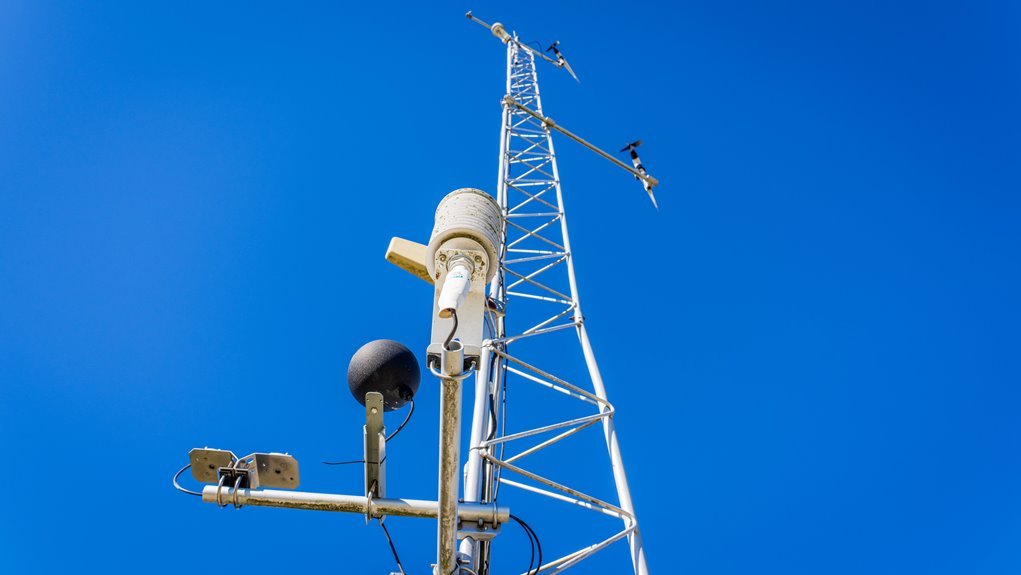
The Telecom Infrastructure Monitoring Report aggregates performance signals across the listed network IDs to assess stability, latency, and throughput against baselines. It delineates uptime and fault trends, maps capacity pressures to regional contexts, and ties governance metrics to data provenance. The document outlines concrete upgrade pathways, policy implications, and accountability mechanisms. While the framework is clear, the implications for cross-sector coordination and traceability warrant closer inspection to determine practical remediation and governance KPI adjustments.
What This Telecom Monitoring Snapshot Reveals
The snapshot reveals how current network performance metrics align with baseline expectations across core telecom domains. Within this context, the analysis examines stability, latency, and throughput, linking results to formal data governance practices and accountability. Telecommunication teams assess telecom redundancy provisions, ensuring resilience without excessive overbuild. Findings emphasize disciplined measurement, traceability, and clear ownership of performance data for continuous improvement.
Uptime and Fault Trends by Network IDs
Uptime and fault trends by network IDs are examined to quantify reliability across distinct segments, linking observed performance to established baseline expectations from the prior snapshot. The analysis identifies uptime insights and fault trends, aligning variance with service level definitions. Findings emphasize network ID-specific stability, anomaly detection, and actionable drivers, enabling targeted remediation and transparent progress tracking for stakeholders seeking freedom in design decisions.
Capacity Pressures and Regional Context
Capacity pressures are assessed by mapping demand growth, occupancy levels, and provisioning gaps across regional footprints to illuminate where capacity constraints translate into service risk.
The analysis situates capacity pressures within a regional context, comparing urban, peri-urban, and rural nodes, highlighting variance in backhaul reliability and fiber reach.
Findings inform risk prioritization and targeted capacity investment.
Practical Pathways: Upgrades, Policies, and Next Steps
Practical pathways for upgrading infrastructure, aligning policy frameworks, and outlining concrete next steps are presented by translating capacity insights into actionable actions.
The analysis identifies pathway gaps that impede scalable deployments and highlights policy implications for procurement, spectrum use, and investment incentives.
Structured recommendations emphasize modular upgrades, data-driven prioritization, cross‑sector coordination, and measurable governance KPIs to reduce uncertainty and accelerate implementation.
Frequently Asked Questions
Who Funded the Telecom Monitoring Project for Those Numbers?
Funding sources remain undisclosed; project sponsorship appears to be institutional, with no explicit sponsor named. The analysis indicates opaque disclosure, hindering definitive attribution of funding. Consequently, funding sources and project sponsorship cannot be conclusively identified.
What Are the Privacy Implications of the Data?
Privacy implications arise from data collection, storage, and processing practices; data minimization is essential. External events influence sensitivity; cybersecurity risks necessitate robust controls. Funding sources, data freshness, and warehouse frequency shape governance and risk exposure in monitoring.
How Frequently Is the Data Warehoused and Updated?
Recent stat: 62% of datasets show latency-dependent updates. The data warehousing cadence varies by source, but generally supports near-real-time to daily refreshes, balancing frequency updates with privacy concerns, cybersecurity risks, external events, and trend interpretation.
Are There Any Cybersecurity Risks Tied to the Metrics?
Yes, there are cybersecurity risks tied to the metrics, including exposure to data breaches and manipulation. The analysis emphasizes data integrity, threat modeling, access controls, and monitoring to mitigate risks while preserving analytical usefulness and operational transparency.
How Do External Events Influence the Reported Trends?
External events drive trend shifts by altering monitoring inputs, timing, and data freshness; privacy implications and data security considerations arise, while funding sources and monitoring methodology shape resilience. This analysis weighs cybersecurity risks against robust external-event responsiveness and transparency.
Conclusion
The analysis confirms stable baseline alignment across network IDs while revealing targeted uptime fluctuations and fault clustering in high-demand regions. Capacity pressures are localized yet actionable, with clear linkage to governance KPIs and data lineage. Upgrades and policy steps are well-scoped, emphasizing cross-domain coordination and transparent progress tracking. If executed, the remediation plan will markedly crystallize decision-making, delivering an almost heroic improvement in reliability—an apex-level performance gain for telecom infrastructure.
