
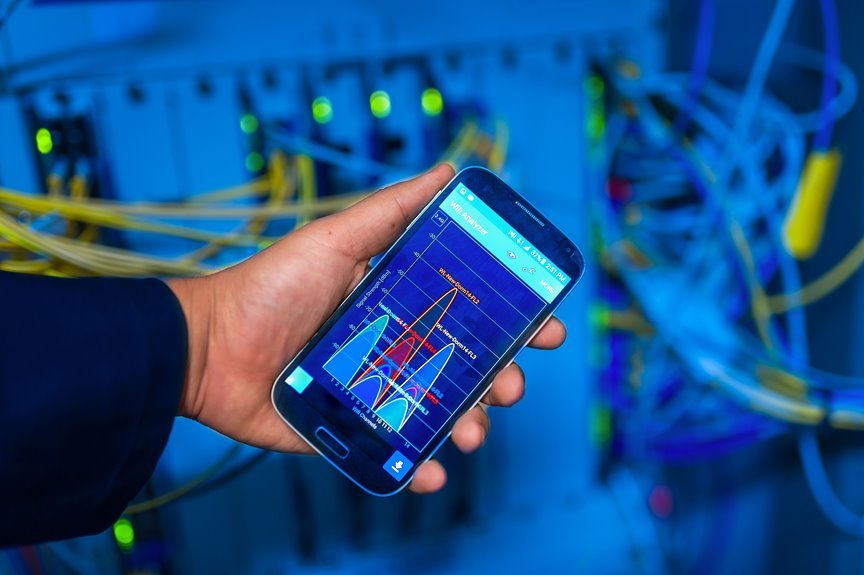
The Network Signal Behavior Analysis & Review Document consolidates methods for assessing stability, capture, and attribution across devices and environments. It emphasizes objective metrics, repeatable benchmarking, and cross-project comparability. The material outlines how latency, throughput, and interference are measured, mapped to environmental factors, and mitigated with structured procedures. It remains focused on controlled testing and evidence-based conclusions, avoiding overstated claims. The discussion invites scrutiny of benchmarks and practical steps to apply the framework in real scenarios, leaving a clear point to pursue next.
What Is Network Signal Behavior and Why It Matters
Network signal behavior refers to how data signals propagate through a network Medium and how they are perceived by network devices.
The analysis concentrates on consistent transmission, minimal distortions, and predictable timing.
Signal stability emerges as a core criterion, guiding performance assessments and fault diagnosis.
Device calibration aligns hardware response with modeled expectations, reducing variability and supporting reproducible results in controlled environments.
How We Capture Signal Integrity Across Devices and Environments
Capturing signal integrity across devices and environments requires a structured, repeatable methodology that treats measurements as objective evidence. The process emphasizes controlled testing conditions, standardized instrumentation, and documented procedures to ensure signal consistency.
Across device diversity, parallel protocols quantify variations, enabling comparative analysis and repeatable benchmarks while maintaining independence from subjective interpretation and environmental bias.
Analyzing Latency, Interference, and Throughput in Real-World Scenarios
In real-world conditions, latency, interference, and throughput must be quantified under varied contexts to reveal performance envelopes and limitations of the network.
The analysis identifies latency patterns across segments and assesses throughput stability amid fluctuating workloads.
Interference sources are mapped to environmental and operational factors, enabling precise attribution and mitigation strategies that preserve consistent performance without overstating capabilities.
Benchmarking, Review Documents, and Practical Troubleshooting Steps
Benchmarking, review documents, and practical troubleshooting steps are organized to provide a repeatable, evidence-based workflow for assessing network performance.
The approach systematically measures signal jitter and spectrum load, identifies deviation patterns, and anchors decisions in documented criteria.
Results feed actionable guidance, enabling consistent optimization, cross-project comparability, and transparent evaluation of remedies while preserving operational flexibility and freedom to adapt methodologies.
Frequently Asked Questions
How Do Privacy Concerns Affect Signal Data Collection?
The question is answered: privacy concerns influence signal data collection by increasing scrutiny and constraints, driving privacy impact assessments and adherence to data minimization practices; researchers prioritize essential data, reducing exposure and safeguarding user autonomy.
What Certifications Apply to Test Equipment Accuracy?
Certifications for test equipment accuracy include ISO/IEC 17025, ANSI/NCSL Z540.3, and ISO 10012. This personified evaluator notes quality control and calibration standards underpin reliable measurements, ensuring traceability, repeatability, and independence in methodical, freedom-seeking teknical environments.
Can Signal Behavior Change With Device Firmware Updates?
Firmware updates can alter device behavior, potentially causing signal drift; thus, calibration may shift post-update. Analysts should revalidate performance, document firmware impact, and ensure repeatable measurements to maintain confidence in signal integrity assessments.
How Is Environmental Sustainability Considered in Testing?
Environmental sustainability is integrated into testing, emphasizing environmental impact and data stewardship. The methodology tracks resource use, waste, and lifecycle implications, ensuring analyses favor minimal environmental harm while preserving data integrity and analytic rigor for freedom-minded stakeholders.
What Are Cost Implications of Long-Term Monitoring?
Cost implications arise from long term monitoring, balancing equipment costs with ongoing operational expenses. Privacy concerns, signal data collection, and certifications influence procurement. Test equipment accuracy, firmware updates, and signal behavior change affect reliability, environmental sustainability, and testing considerations.
Conclusion
In the end, the document reveals a method: quantify, compare, and isolate every variable. Across devices and environments, latency, interference, and throughput are not static facts but measurable signals that travel through controlled tests and real-world use. As findings accumulate, patterns emerge—yet shadows remain: hidden sources, subtle jitter, unseen interference. The suspense lies in the ongoing pursuit of reproducible benchmarks, where each page turn tightens attribution and each replication narrows uncertainty, guiding decisive, data-driven optimization.
