
The distributed telecom infrastructure analysis file outlines a framework for coordinating towers, fibers, data centers, switches, and routing protocols. It emphasizes telemetry-driven governance, cross-domain data flows, and modular controls for security and compliance. The document argues for proactive fault detection, anomaly analysis, and latency profiling as core capabilities. It presents a methodical approach to balancing autonomy with governance, while addressing privacy and vendor risk. Consider what comes next as the assessment unfolds.
What Is Distributed Telecom Infrastructure and Why It Matters
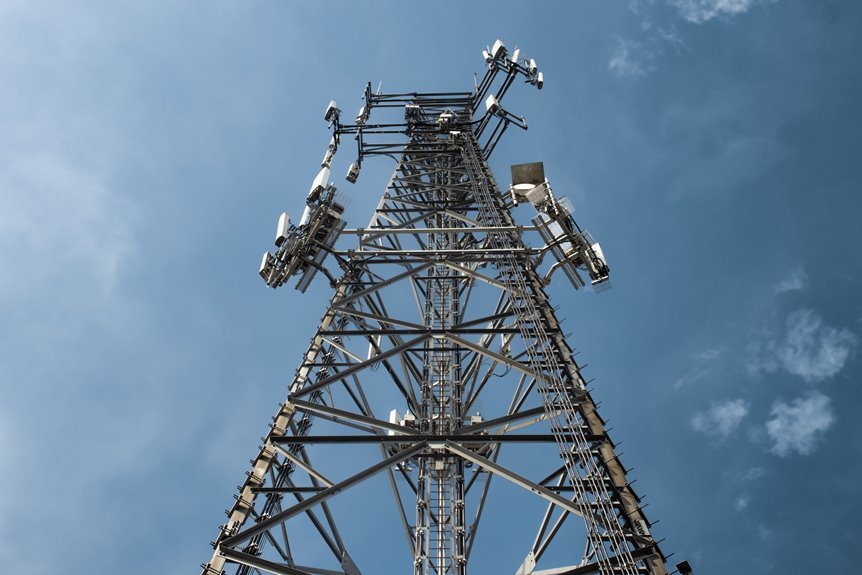
Distributed telecom infrastructure refers to the network of physical and logical assets—such as towers, fibers, data centers, switches, and routing protocols—that collectively enable scalable, reliable communication services.
It underpins resilience, capacity, and adaptability in modern ecosystems.
The concept emphasizes distributed infrastructure design, governance, and operation, while network telemetry provides real-time visibility, performance metrics, and proactive fault detection essential for informed decision-making and continuous optimization.
Mapping Data Flows Across Distributed Networks
Mapping data flows across distributed networks requires a precise articulation of data paths, dependencies, and transformation points. The analysis identifies cross‑domain interfaces, buffering strategies, and routing policies that influence performance. Methodical measurement emphasizes scalability benchmarks and latency profiling, enabling objective comparisons and optimization opportunities. Findings emphasize modular architectures, repeatable testing, and documentation that supports interoperability while preserving freedom to innovate and adapt.
Governance, Security, and Compliance in Distributed Models
Governance, security, and compliance in distributed models demand a structured framework that aligns organizational policy with technical controls, risk management, and regulatory obligations.
The narrative provides governance frameworks that centralize accountability, security architectures that codify protection layers, and compliance roadmaps that schedule audits and controls.
Risk assessments underpin decision-making, ensuring transparent tracing, scalable controls, and auditable conformity across distributed entities.
Practical Analytics: Turning Telemetry Into Actionable Decisions
How can telemetry be translated into decisive actions within complex telecom environments? Telemetry data is filtered through structured analytics to reveal actionable insights, enabling rapid decision cycles. Methods emphasize anomaly detection, root-cause analysis, and impact assessment. Attention to data privacy and vendor risk ensures compliant, resilient responses, balancing autonomy with governance while preserving freedom to adapt infrastructural strategies.
Frequently Asked Questions
How Is Data Sovereignty Handled in Distributed Telecom Analytics?
Data sovereignty is ensured through policy-aligned data localization, access controls, and auditable governance within distributed analytics frameworks, enabling compliant data presence, traceable lineage, and secure inter-node processing across borders in a methodical, privacy-respecting manner.
What Are the Cost Implications of Distributed Analytics at Scale?
Distributed analytics scale exhibits substantial costs, but strategic deployment minimizes expense; cost efficiency hinges on data placement decisions, workload distribution, and incremental infrastructure investments, enabling adaptable governance while maintaining transparent, scalable operations.
Which Vendors Support Inter-Operability for Telemetry Formats?
Vendor interoperability for telemetry formats varies by ecosystem; several major vendors claim broad support, though true interoperability often requires standard adapters, governance, and active collaboration. Telemetry formats compatibility remains contingent on open, extensible interfaces across platforms.
How Do You Measure Latency Impact on Real-Time Decisions?
Latency budgeting quantifies acceptable delays, enabling informed design choices; decision latency is minimized through parallel processing and predictive modeling, while telemetry streams are prioritized. The approach balances completeness against urgency, sustaining real-time responsiveness and governance.
What Disaster Recovery Strategies Exist for Distributed Analytics?
Disaster recovery strategies for distributed analytics emphasize data governance and edge orchestration, enabling rapid failover, data consistency, and resilient processing. They leverage multi-site replication, deterministic RPO/RTO targets, and automated failback to preserve analytic sovereignty and operational freedom.
Conclusion
Distributed telecom infrastructure enables scalable, resilient service delivery by coordinating towers, fibers, data centers, and switches under telemetry-driven governance. A notable statistic: networks employing proactive anomaly detection reduce mean time to repair by up to 35–50%. The conclusion emphasizes cross-domain data flows, modular controls, and auditable security to balance autonomy with governance, while addressing privacy and vendor risk. The approach translates telemetry into actionable decisions, aligning capacity planning with reliability goals in multi-entity environments.
